St Julian’s
St Julian’s is one of Malta’s major tourist resorts comprising Paceville, Portomaso, Mercury Towers, and St George’s Bay. In Maltese St Julians is called San Giljan. While retaining much of the typical Mediterranean culture inherent in the Maltese islands, the relatively modern town of St Julians is also the entertainment capital offering anything you can imagine that is fun and leisure. St. Julian’s was once a fishing village; only a few fishermen remain. The modern trade in St. Julian’s is connected with tourists and nightlife.
History of St Julian’s
The town bears the name of Saint Julian, the patron saint of hunters. He is also referred to as Julian the Hospitaller and Julian the Poor.
“đostra” is the name of a very specific competition that is associated with the town’s feast. In this age-old sporting event, competitors must run and climb as far as they can along a greased pole dangling above the ocean. The first person to seize one of the three flags that are hanging over the edge—each flag denoting a different prize—wins.
“Musketterija” is another custom associated with this community’s feast day. It began in 1982 and involves hunters launching black powder-filled blank cartridges from the parish church’s roof while the patron saint statue is being carried out of the building. Many claim that this custom is consistent with the area’s heritage. It had once served as the Knights of Malta’s hunting grounds.
Where St Julian’s Sits on the Island
St Julian’s falls within the Northern Harbour District, in Malta’s Eastern Region. Because of its position on the coast beside Sliema, most people describe it as part of the harbour and northern coastal area. It is home to almost 14,700 residents, and around 59% of them are foreign nationals, which gives the town a genuinely international feel.
St Julian’s borders Gżira, Pembroke, San Ġwann, Sliema and Swieqi. As a result, you can walk along the seafront to Sliema, reach Valletta within minutes, and find the rest of the harbour region close by.
St Julian’s sits on Malta’s east coast, just north of Sliema, and it is one of the island’s most energetic and international towns. Its bays, its restaurants and its nightlife attract residents, tenants and investors from across the world. So whether you want a waterfront apartment, a strong rental market, or one of Malta’s best-known SDA developments, St Julian’s deserves a serious look. Your next chapter starts here.
Schools in the Area
St Julian’s is well placed for schooling, with a wide range of church, state and independent schools across the town and in neighbouring Sliema, Swieqi, Pembroke and San Ġwann. Verdala International School, in nearby Pembroke, is also a short drive away. So families here have plenty of choice at every stage of education.
Lifestyle in St Julians
St Julian’s offers a lifestyle built around the sea, the restaurants and a lively social scene. The town began as a hunting ground for the Knights of St John, who built the first chapel here around 1580. Fishermen and farmers later settled around Spinola Bay, and the construction of Spinola Palace in 1688 marked the first step in the town’s coastal development. Today, only a few fishermen remain, but traditional painted boats still sit in Spinola Bay.
The town is made up of several informal districts. Paceville is Malta’s main nightlife district, with clubs, bars and restaurants between Spinola Bay and St George’s Bay. Balluta Bay is known for its Art Deco-inspired Balluta Buildings. Meanwhile, Ta’ Ġiorni, Tal-Għoqod and St Andrew’s offer quieter residential streets away from the main buzz. So the character of St Julian’s changes noticeably from one street to the next.
Because of its location, its amenities and its rental demand, St Julian’s suits a very wide range of buyers. Property here ranges from traditional townhouses to modern apartments, luxury penthouses and some of the island’s most exclusive SDA towers. However, noise, traffic and parking are worth keeping in mind, especially near Paceville.
Feast Celebrations
St Julian’s patron feast honours St Julian, and the liturgical feast falls on 12 February. In addition, a summer festa is held on the last Sunday of August, with processions, band marches and fireworks, organised by the town’s two band clubs. The feast is also linked to a local tradition called Musketterija, which fits the area’s history as a hunting ground for the Knights. Each June, the Lapsi Feast also turns the streets near Spinola Bay into a celebration of folklore, music and food.
Restaurants and Dining
St Julian’s has one of the busiest dining scenes on the island. Spinola Bay is especially popular, with restaurants and cafés lining the promenade beside the fishing boats. Paceville adds a wide mix of casual spots, while Portomaso and St George’s Bay offer further options with sea views. As a result, residents can choose almost any style of food within a short walk.
Grocery Shops and Everyday Amenities
St Julian’s is well served for everyday shopping, with supermarkets, convenience stores, bakeries, pharmacies and banks spread throughout the town. Portomaso also includes shops and services within the development itself. So whether you need a quick top-up or a full weekly shop, almost everything is close to home.
Transport Links
St Julian’s is one of the best-connected towns in Malta. Routes 13, 14, 15 and 16 link the area to Valletta, while further routes reach Mosta, Birkirkara and the rest of the island. In addition, Paceville is a major bus hub, particularly for late-night services. Drivers should note that traffic and parking can be difficult, especially in summer and at weekends.
Special Designated Areas (SDA)
St Julian’s is home to a strong concentration of Special Designated Areas, more than almost any other locality in Malta apart from Sliema. Each carries full SDA status. This means non-EU buyers can purchase here without needing an AIP permit, and there is no limit on the number of properties they can own.
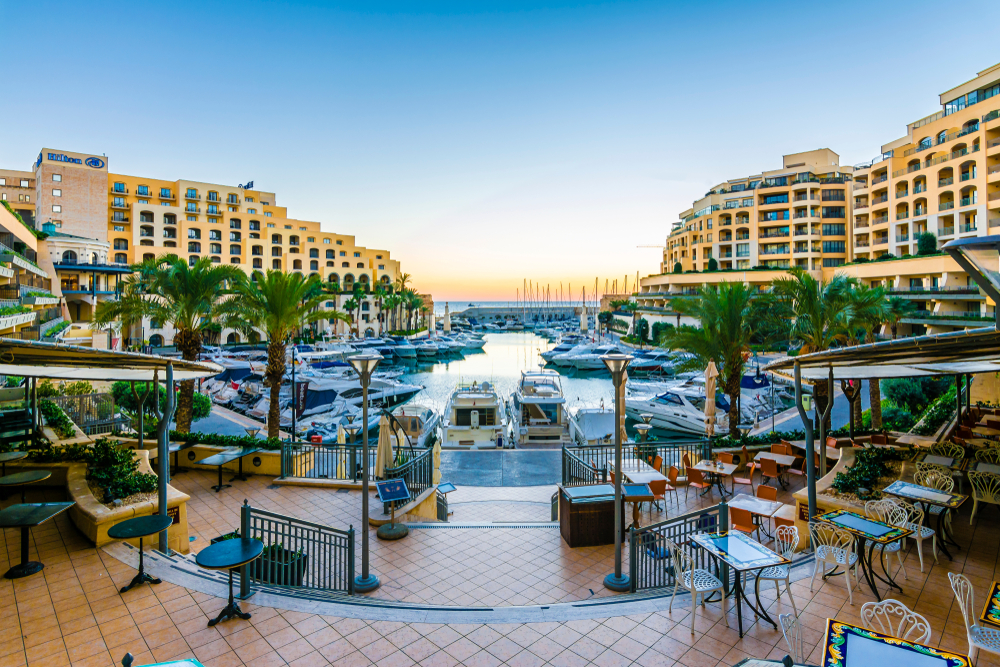
- Portomaso: One of Malta’s most prestigious addresses, built around a three-basin yacht marina with a lighthouse. The development includes the Hilton Malta, a casino, an office tower, shops and restaurants. It also includes Portomaso Laguna, a smaller SDA with a private beach and communal pool.
- Mercury Towers: Designed by architect Zaha Hadid, this landmark tower blends the historic Mercury House with a modern high-rise, and it is regarded as Malta’s tallest building. A neighbouring development, Mercury Suites, is also an SDA.
- Pender Gardens: A self-contained residential development in the heart of St Julian’s, close to St George’s Bay and Paceville, with easy access to the main arterial road.
- ORA Residences: One of the newest SDAs, set in St George’s Bay and made up of two towers, ORA West and ORA East, in a master-planned green development.
So for non-EU buyers, St Julian’s offers a wide choice of SDA options, from marina living to high-rise towers. Each development has its own character, price range and amenities. Therefore, it is worth comparing them in person before deciding.

Nearby Beaches
St Julian’s has a few small bays rather than long beaches. St George’s Bay is the most popular spot for swimming and sunbathing, with a small sandy beach on the Paceville side of town. Balluta Bay offers another easy access point to the sea. For rocky swimming and longer promenade walks, Sliema is just a short walk along the coast. So a swim is never far from home in St Julian’s.
Nightlife
St Julian’s is the centre of Malta’s nightlife, and most of the action is in Paceville, the district between Spinola Bay and St George’s Bay. Paceville is packed with nightclubs, bars, pubs and late-night restaurants, and it draws a young, international crowd, especially at weekends and through the summer. Away from the main strip, the mood is calmer. Spinola Bay offers waterfront bars and restaurants for a relaxed drink beside the fishing boats, while Portomaso and St George’s Bay suit a quieter evening out. Residents should bear in mind that noise and crowds are heaviest around Paceville, so the streets just beyond it are generally more peaceful. For most people, that balance is part of the appeal: a lively night out is only a short walk away, and a quieter street is not far either.
Why Choose St Julian’s
St Julian’s offers something rare on the island: seafront living, a strong international community and a wide choice of SDA developments, all in one lively town. Because of this, it continues to attract buyers, tenants and investors from Malta and abroad. Whether you are drawn to Spinola Bay, Portomaso, or the towers of Mercury and ORA, St Julian’s offers a genuinely vibrant home on Malta’s east coast.
BUY
Properties For Sale in St Julian's
RENT
Properties For Rent in St Julian's
Localities
Discover other Maltese localities
Take a deep dive and browse the Maltese localities and local insights to see if the homes for sale/rent are right for you.